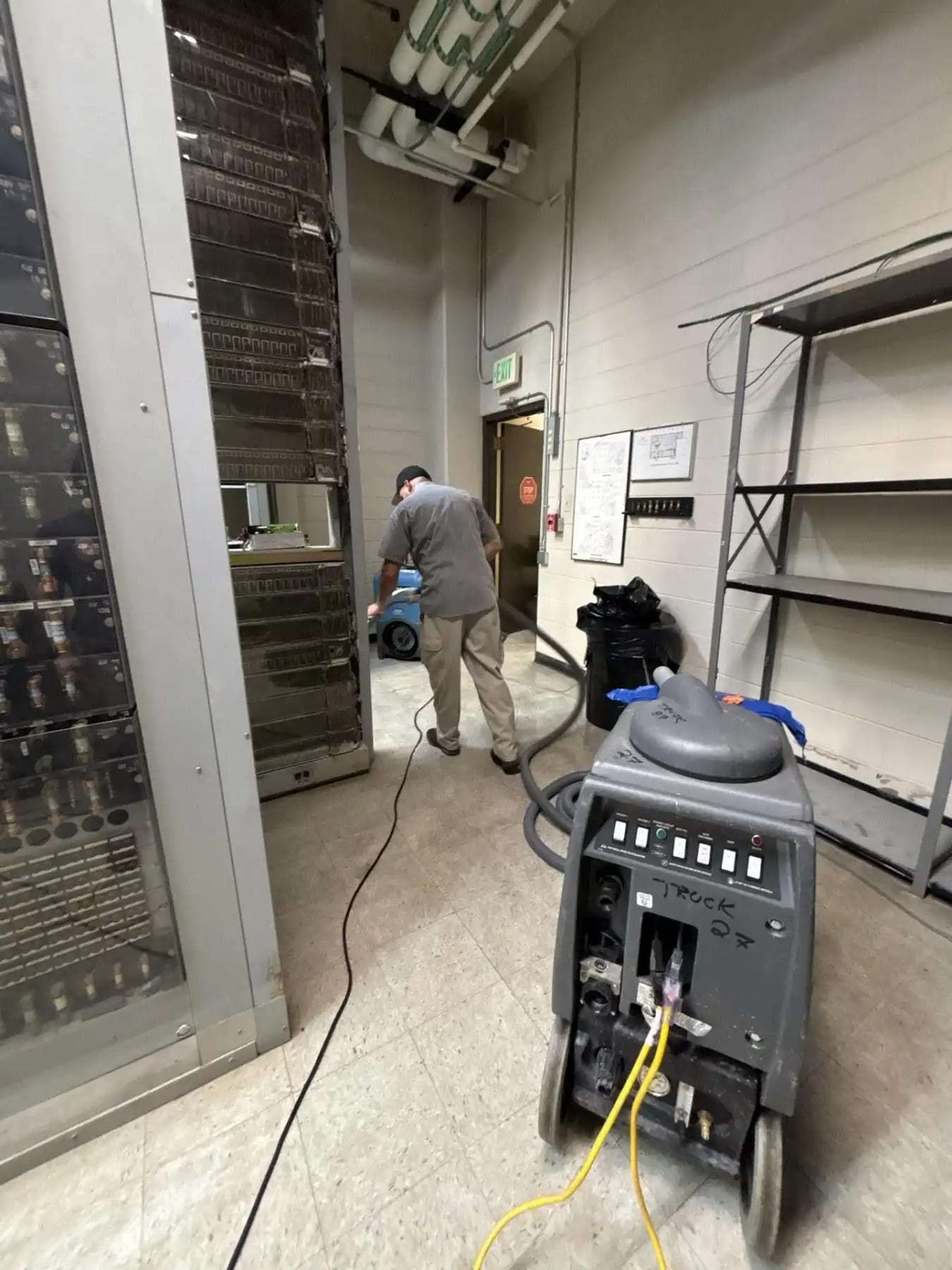
Technician with drying equipment in an industrial room with an open electrical cabinet. Example of the work involved; the photo does not show a specific property or a job for this site.
What to look for in a former grow room
Look, photograph and note. Do not open panels or disconnect equipment yourself unless you are qualified.
- Extension cords or power strips chained together and run along floors or ceilings.
- New outlets, junction boxes or cable that look different from the rest of the house.
- Discolored or warm-looking outlet faces and switch plates.
- Breakers that appear newer than the panel or are labeled for the grow room.
- Ballasts, timers or controllers screwed to walls or joists.
- Propane or natural gas CO2 generators, regulators or tanks.
- Hanging hardware, chains and hooks anchored into ceiling joists.
- Any sign that wiring was tapped ahead of the meter; report that to the utility.
Why the electrical side comes before odor
High-intensity grow lights and the fans, dehumidifiers and heaters that support them can draw far more power than a basement bedroom was wired for. Some setups were done carefully with permits; others were improvised. Heat and moisture in a grow room also speed up corrosion on terminals and boxes. Odor work involves water, cleaning chemicals, sometimes wet extraction and air movers, none of which belong near questionable wiring.
Some growers enrich the air with carbon dioxide. Compressed CO2 tanks are relatively simple, but generators that burn propane or natural gas produce heat and combustion by-products and need proper venting and gas connections. If one was installed, a qualified gas technician should confirm the line is capped safely and nothing is left connected.
This step also protects you later. When you sell or rent the property, being able to show that an electrician inspected and corrected grow-related wiring, with a permit where the city requires one, answers questions buyers and inspectors are likely to ask.
Questions for the electrician or building department
- Were any circuits added for the grow, and were they installed to code with a permit?
- Is the panel adequate for normal household use now that grow equipment is gone?
- Should added outlets or wiring be removed or can they stay safely?
- Is there moisture or corrosion damage in boxes, conduit or fixtures in that room?
- Does correcting unpermitted work require a permit from the city or county where the home is located?
Common questions
- Who issues electrical permits in the Denver area?
- It depends on where the property is. In Denver, ask Community Planning and Development; in suburbs such as Aurora or Lakewood, ask that city's building division. Unincorporated areas go through the county.
General information for the Denver area, not a quote or professional advice. In an emergency, call 911.